
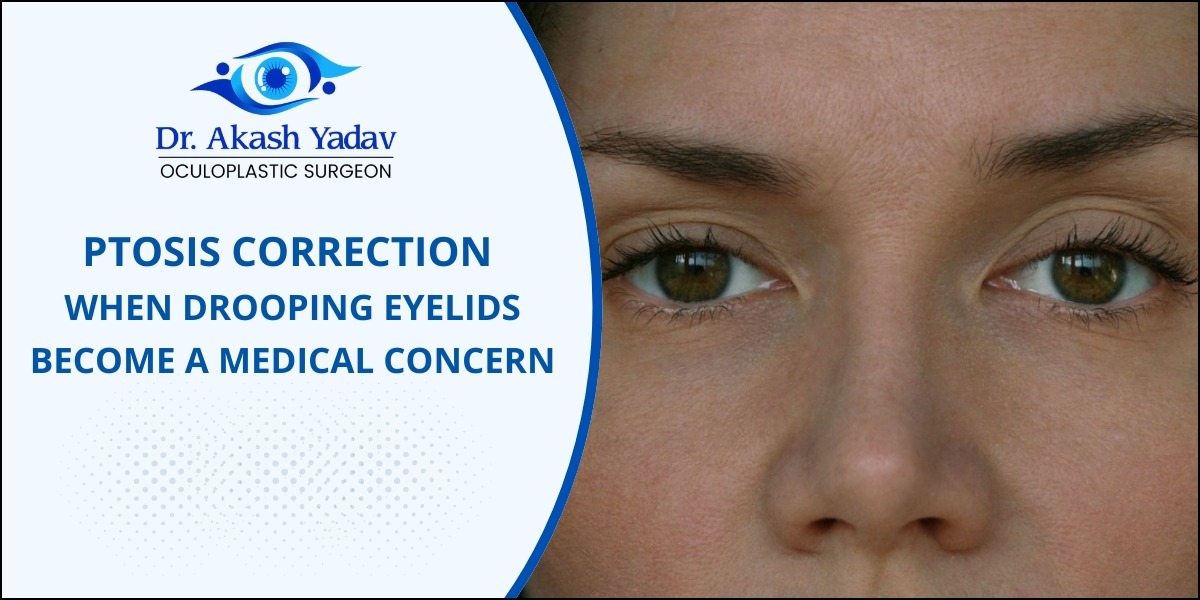
Drooping eyelids may seem like a small cosmetic issue, but in many cases, they can signal an underlying medical condition. Known as ptosis, this condition can affect both children and adults, sometimes interfering with vision and daily life.
In this blog, we’ll explain what ptosis is, its causes, symptoms, and when you should consider ptosis correction surgery.
What is Ptosis?
Ptosis (pronounced “toe-sis”) refers to the drooping of the upper eyelid. It can affect one eye (unilateral) or both eyes (bilateral). In mild cases, it may only change appearance, but in severe cases, it can block vision.
Common Causes of Drooping Eyelids
Ptosis can develop due to several reasons, including:
1. Age-Related Changes
As we age, the muscles that lift the eyelid weaken, leading to drooping.
2. Congenital Ptosis
Some children are born with weak eyelid muscles, which can affect their vision development.
3. Nerve or Muscle Disorders
Conditions like nerve damage or muscle diseases can interfere with eyelid movement.
4. Eye Injury or Surgery
Trauma or previous eye surgeries may weaken the eyelid structure.
5. Medical Conditions
Certain neurological conditions can also lead to ptosis and require immediate attention.
Symptoms You Should Not Ignore
While mild drooping may not be serious, watch out for these signs:
- Eyelid covering part of the pupil
- Difficulty keeping eyes open
- Frequent eyebrow raising to improve vision
- Head tilting backward to see clearly
- Eye strain or fatigue
If you notice these symptoms, it’s important to consult a specialist.
When Does Ptosis Become a Medical Concern?
Ptosis becomes a medical issue when it:
- Blocks vision (especially in children, affecting development)
- Worsens over time
- Occurs suddenly, which may indicate a nerve-related problem
- Causes eye strain or headaches
- Affects daily activities like reading or driving
Early diagnosis can prevent complications, especially in children where untreated ptosis may lead to lazy eye (amblyopia).
What is Ptosis Correction Surgery?
Ptosis correction is a surgical procedure that tightens or repositions the eyelid muscles to lift the eyelid to a normal position.
Key Benefits:
- Improves vision
- Enhances appearance
- Reduces eye strain
- Boosts confidence
The procedure is usually safe and performed under local or general anesthesia, depending on the patient’s age and condition.
Recovery After Ptosis Surgery
Recovery is generally smooth and quick:
- Mild swelling and bruising for a few days
- Return to normal activities within 1–2 weeks
- Full results visible in a few weeks
Following your doctor’s instructions ensures faster healing.
Who Should Consider Ptosis Correction?
You should consider treatment if:
- Your eyelid interferes with vision
- You feel discomfort or strain
- The condition affects your confidence
- A child shows signs of drooping eyelids
About Dr. Akash Yadav – Top Oculoplastic Surgeon in Pune
Dr. Akash Yadav is a highly skilled oculoplastic surgeon in Pune, specializing in advanced eyelid procedures, including ptosis correction. With a patient-focused approach and expertise in both functional and cosmetic eye surgeries, he ensures accurate diagnosis and personalized treatment plans. If you are looking for reliable and effective ptosis treatment in Pune, Dr. Akash Yadav offers safe surgical solutions to restore both vision and confidence.
FAQs About Ptosis
1. Is ptosis only a cosmetic issue?
No, in many cases it can affect vision and indicate underlying health problems.
2. Can ptosis go away on its own?
Usually not. Treatment is often required, especially if it worsens.
3. Is ptosis surgery safe?
Yes, when performed by an experienced specialist, it is generally safe and effective.
4. How long does the surgery take?
It typically takes about 45 minutes to 1.5 hours.
5. Can children undergo ptosis surgery?
Yes, especially if vision is affected, early treatment is recommended.
