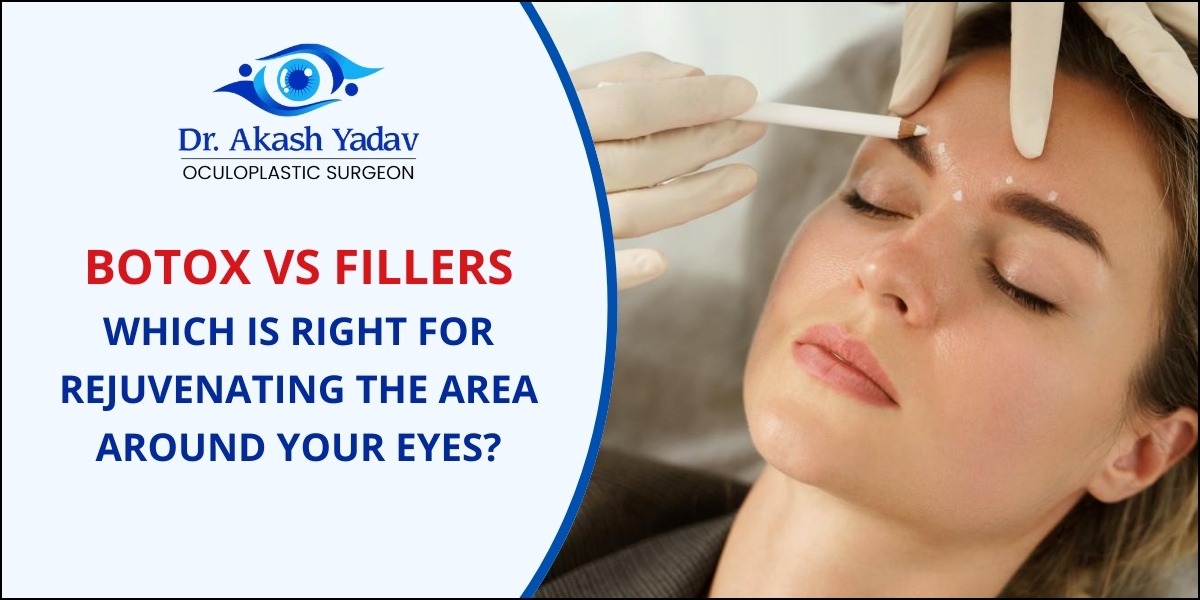
When it comes to refreshing the delicate skin around your eyes, the choice between Botox and dermal fillers is one of the most common dilemmas in aesthetic medicine. Both are highly effective, minimally invasive treatments, but they work in fundamentally different ways. Understanding these differences is key to achieving the natural, rejuvenated look you desire without looking “overdone.”
The eye area—encompassing crow’s feet, under-eye bags, and tear troughs—is often the first to show signs of aging, stress, and fatigue. Choosing the wrong treatment here can lead to disappointing results. This guide will break down the science, benefits, and ideal uses for Botox and fillers around the eyes, empowering you to make an informed decision with your provider.
How Botox Works Around the Eyes
Botox is a neuromodulator made from purified botulinum toxin. Its primary function is to temporarily relax muscles.
- Primary Target: Dynamic wrinkles, which are lines formed by repeated facial movements like smiling, squinting, or frowning.
- Key Treatment Area for Eyes: Crow’s Feet – those fine lines that radiate from the outer corners of the eyes. By relaxing the orbicularis oculi muscle, Botox smooths these lines and prevents them from deepening.
- Result: A smoother, more relaxed appearance that preserves natural expression. It does not add volume or lift sagging skin.
How Dermal Fillers Work Around the Eyes
Dermal fillers are gel-like substances, typically made of hyaluronic acid (a naturally occurring substance in your skin), that are injected to add volume, fill depressions, and lift tissue.
- Primary Target: Static wrinkles, volume loss, and hollows.
- Key Treatment Areas for Eyes:
-
- Tear Troughs: The hollows under the eyes that can cause dark shadows and a tired appearance.
- Under-Eye Bags (in specific cases): Fillers can be used strategically to smooth the transition between the cheek and the bag, minimizing its appearance.
- Upper Eyelid Hollowing: To address age-related volume loss in the upper eyelid.
- Result: A refreshed, well-rested look by restoring lost volume and smoothing contours. The best fillers for this area are very thin and integrate smoothly.
The Core Difference: Relax vs. Fill
Think of it this way:
- Botox is for lines caused by movement. It’s about prevention and softening.
- Fillers are for lines and shadows caused by volume loss. It’s about restoration and contouring.
Can They Be Combined?
Absolutely. In fact, combination treatment is often the gold standard for complete periocular (around the eye) rejuvenation. A skilled practitioner might use:
- Botox to soften crow’s feet.
- A delicate filler to address under-eye hollows.
This combined approach tackles both dynamic wrinkles and static volume loss for a harmoniously youthful result.
Choosing What’s Right For You: A Quick Guide
- Choose Botox if… Your main concern is fine lines at the outer corners of your eyes (crow’s feet) when you smile or squint.
- Choose Fillers if… Your main concern is hollows, dark shadows, or deep grooves under your eyes that are present even when your face is at rest.
- Consider Combination Treatment if… You see both dynamic lines and static hollows, which is very common.
The most critical step is a consultation with a qualified medical professional. They will assess your facial anatomy, skin quality, muscle activity, and aesthetic goals to create a safe, personalized plan.
About Dr. Akash Yadav – Oculoplastic Surgeon in Pune
For those seeking botox and fillers treatment in Pune, especially around the sensitive eye area, consulting a specialist with dedicated training is paramount. Dr. Akash Yadav, a renowned Oculoplastic Surgeon in Pune, brings a unique and expert perspective to these treatments.
Visit : Dr. Akash Yadav – Oculoplastic, Cataract & Aesthetic Eye Surgeon in Pune
Address : ASG Eye Hospital, OPD No. 1, 2&3, Plot, 557/1, Bhambudra Cello, platina building, FC Road, Near Bank of Maharashtra, Shivajinagar, Pune
Contact Number : +91 9821136014
FAQs on Botox vs. Fillers for Eyes
1. Which is better for under eyes: Botox or filler?
Filler is typically better for under-eye hollows and dark circles, as it adds volume. Botox is not usually injected directly under the eye for rejuvenation.
2. Can Botox be used for crow’s feet?
Yes, Botox is the primary and most effective treatment for smoothing crow’s feet wrinkles caused by smiling and squinting.
3. Do fillers help with eye bags?
In some cases, yes. Fillers can camouflage mild under-eye bags by smoothing the transition between the bag and the cheek, but they cannot remove the bag itself. Surgery (blepharoplasty) may be needed for significant bags.
4. How long does Botox last around the eyes?
Results typically last 3-4 months for Botox around the eyes, as this is a high-movement area.
5. Are fillers under eyes safe?
When performed by an experienced, skilled injector using appropriate products, under-eye fillers are safe. Choosing a specialist familiar with the delicate eye anatomy is crucial to minimize risks like swelling or lumpiness.
